



Transforming sensors and technology into skills for navigating the future

A Gefran project for STEM (Science, Technology, Engineering, Mathematics) education and inclusion has involved 500 students from secondary schools in the territory around the company's Provaglio d'Iseo (Brescia, Italy) site, transforming sensors and technology into real skills and guidance for the future. The project was developed through Gefran's educational Innovation LAB, one of the concrete actions of its Strategic Sustainability Plan. The latter recognises the active involvement of young generations as a fundamental lever for responsible territorial development, and amongst its strategic objectives is the promotion of access to STEM disciplines as a tool to foster equal opportunities, conscious orientation and skills development for new generations. The project represents an operational translation of this vision and has brought Gefran directly into lower secondary schools.
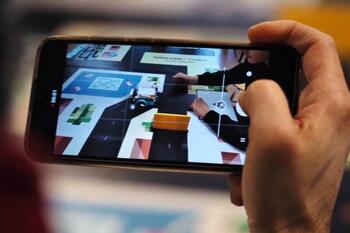
To this end, the company has conceived and launched Innovation LAB as an experiential laboratory aimed at girls and boys in lower secondary schools in the Brescia area. Designed in collaboration with Edoomark, the initiative aims not only to transmit technical knowledge, but to stimulate critical thinking, collaboration and awareness of one's own aptitudes, through creative and cooperative STEAM (which also includes art) activities. The approach is based on real challenges to be tackled in groups, to understand how science, technology, engineering, art and mathematics are intertwined in the world around us.
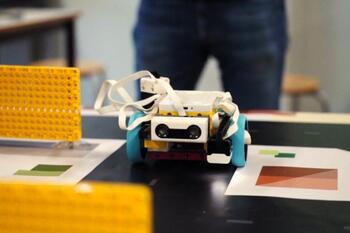
The laboratory is based on a practical activity in which participants are called upon to solve a concrete problem through play and experimentation. Organised in teams, students work on a structured playing field, designed to simulate a course with obstacles and different situations to tackle. Each team designs and programmes a motorised car made from plastic building bricks, equipped with distance, colour, pressure, inclination and rotation sensors, with the objective of covering the greatest possible number of centimetres whilst correctly managing the track. Through route analysis, strategy definition, programming and testing, participants experience technology first-hand. The experience requires empathy, intuition, precision and creativity and encourages active learning, in which understanding arises from observation, error and shared reflection within the group.
Between November and December last year, the project involved 11 schools, 23 classes and 559 students, confirming strong interest from schools in the area and also generating a waiting list. The feedback collected highlights high appreciation for the proposed experience, recognised as engaging, effective and consistent with educational objectives. Teachers and students have emphasised the value of a practical and collaborative approach, capable of stimulating motivation, active participation and reflection on one's future. Beyond STEAM content, the laboratory has fostered the development of fundamental transversal skills – such as problem solving, operational autonomy, observation skills and teamwork – offering an inclusive learning context, in which error is recognised as an integral part of the growth process.
Innovation LAB represents a further sign of the continuity of Gefran's educational and training activities. The requests emerging from the institutes indicate a desire to consolidate this model in future school programmes as well. The project confirms itself as a replicable and scalable experience, capable of generating educational value and strengthening Gefran's role over time as a responsible partner in training new generations.
Most read news