



Amaplast expresses deep concern about EU-USA tariff agreement
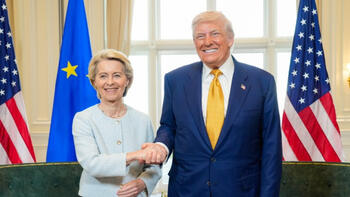
Amaplast, Italy’s national trade association representing over 170 manufacturers of machinery for plastics and rubber processing, and member of Confindustria, expresses deep concern over the trade agreement recently signed in Scotland between US President Donald Trump and the Presi-dent of the European Commission Ursula von der Leyen regarding US tariffs.
The compromise reached, which introduces a flat 15% tariff on a wide range of European products, constitutes – according to the association – a serious obstacle for the Italian and European manufacturing industry. Particularly alarming is the lack of clarity regarding possible exemptions and the failure to lift the current 50% tariff on European steel.
In addition to tariffs, the agreement includes substantial financial commitments for the European Union: 750 billion dollars in energy purchases from the United States over the next three years, 600 billion dollars in investments to be made in the US within two years, and unspecified military supplies. All these elements place a disproportionate burden on European industry without offering adequate compensation.
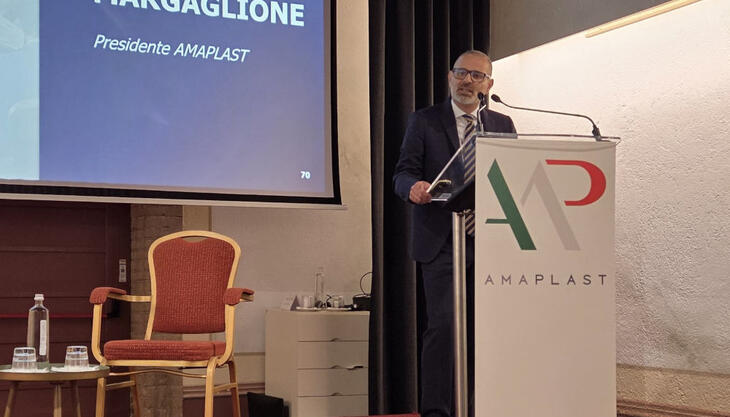
“This is not an agreement, it’s more like a surrender,” commented Amaplast President Massimo Margaglione. “In a global context already affected by a weakened dollar and sluggish demand, a blanket 15% tariff is a devastating blow for our companies, which have always driven Italian exports through quality, technology and reliability.”
The sector represented by Amaplast exports around 10% of its total turnover to the United States. The new conditions imposed by the agreement could significantly hinder access to one of the most important markets for the sector, which is already suffering from currency fluctuations and an uncertain global outlook.
Amaplast therefore urges the Italian Government and the European Commission to adopt a more assertive strategy in defending European industry and calls for urgent clarification on which goods will benefit from tariff exemptions. The association hopes that, in view of the globally recognised value of Made in Italy and the strong export orientation of Italian companies (over 70% of all ma-chinery produced is sold abroad), plastics and rubber processing machinery will be included among the products exempted from the new tariff measures.
“Today more than ever,” concluded Massimo Margaglione, “Europe needs industrial and monetary policies capable of meeting the global challenge. We cannot allow entrepreneurs to face such unstable in-ternational scenarios alone. Without a shared strategic vision, we risk not only competitiveness, but Europe’s very social cohesion.”

Most read news