



Sacmi presents Purecap at K 2025
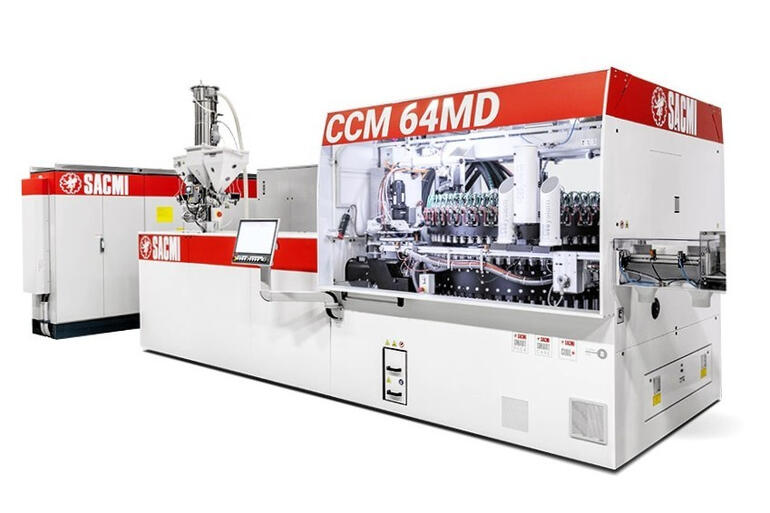
At the heart of its exhibition proposal at K 2025, Sacmi will present Purecap, a circular economy project for creating a sustainable supply chain based on the use of rHDPE, high-density polyethylene recycled and certified for food applications. The star of the company's stand will be the new CCM64MD, a compression press with a capacity of up to 2,850 caps per minute with 64 moulds, suitable for processing blends containing recycled HDPE. During trade fair demonstrations, the press will produce 26/22 GME30.28 tethered caps for water, manufactured with up to 50% recycled resin.
With the Purecap project, Sacmi aims to provide a concrete response to European and international regulatory developments and anticipate this change with the objective of closing the loop to create a complete industrial supply chain, from recycled material selection to the finished cap.
In this perspective, the process identified is mechanical recycling, which has less impact than chemical recycling, both economically and in terms of CO2 emissions. The recycled plastic used comes predominantly from the beverages supply chain, favoured by the growing adoption of the new tethered standard which allows the cap to be disposed of together with the bottle. The flakes are selected and separated by both polymer and colour, then extruded, subjected to a decontamination and granulation process. The material thus obtained undergoes functional and mechanical testing both at external laboratories and in Sacmi's Rigid Packaging LAB, in both granule and cap form, to ensure performance.
Beyond machine, mould and cap design, the company has set itself the objective of providing a production recipe that also includes the optimal balance between virgin and recycled plastic (manageable directly on the CCM), the colourant parameters necessary to achieve the desired colour and the CCM production line settings. Among the advantages, beyond saving virgin plastic in proportion to the rHDPE quota present in the recipe, the solution would enable a reduction in emissions of up to 50% for each kg of recycled resin.

Most read news